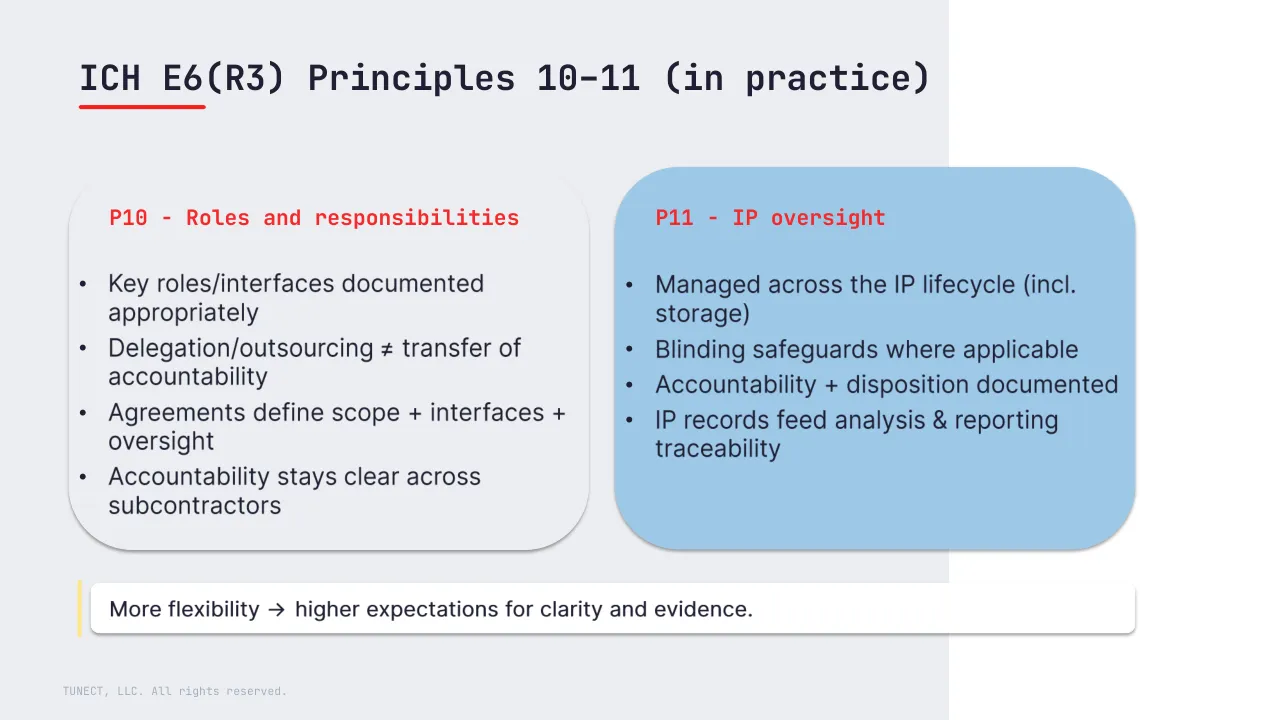
We’re closing our E6(R3) series with two principles that most often decide whether execution stays clean: role clarity and IP/blinding traceability. 10) Roles and responsibilities (clarity + oversight) Key roles, interfaces, and responsibilities should be clearly defined and documented appropriately…
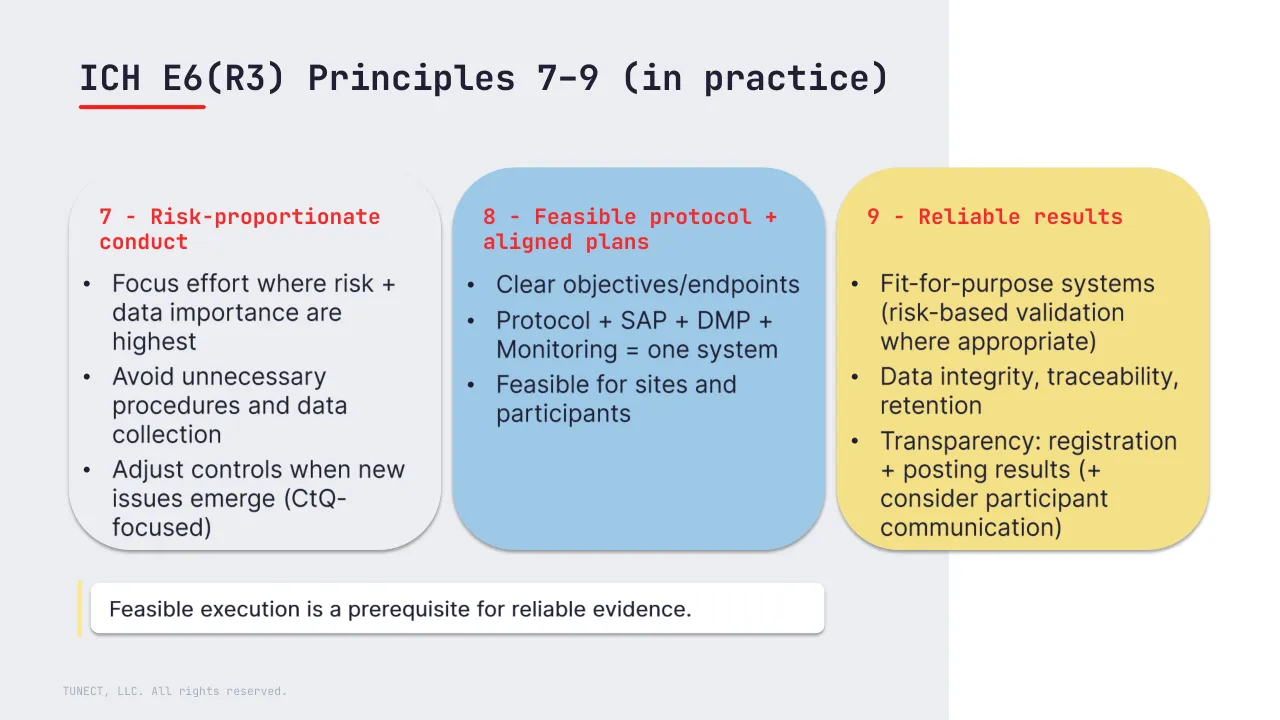
Now we move from design principles to making execution feasible and ensuring the results are reliable. 7) Risk-proportionate trial conduct (avoid unnecessary burden) Processes should be proportionate to risks to participants (including risks beyond usual care where relevant) and to…
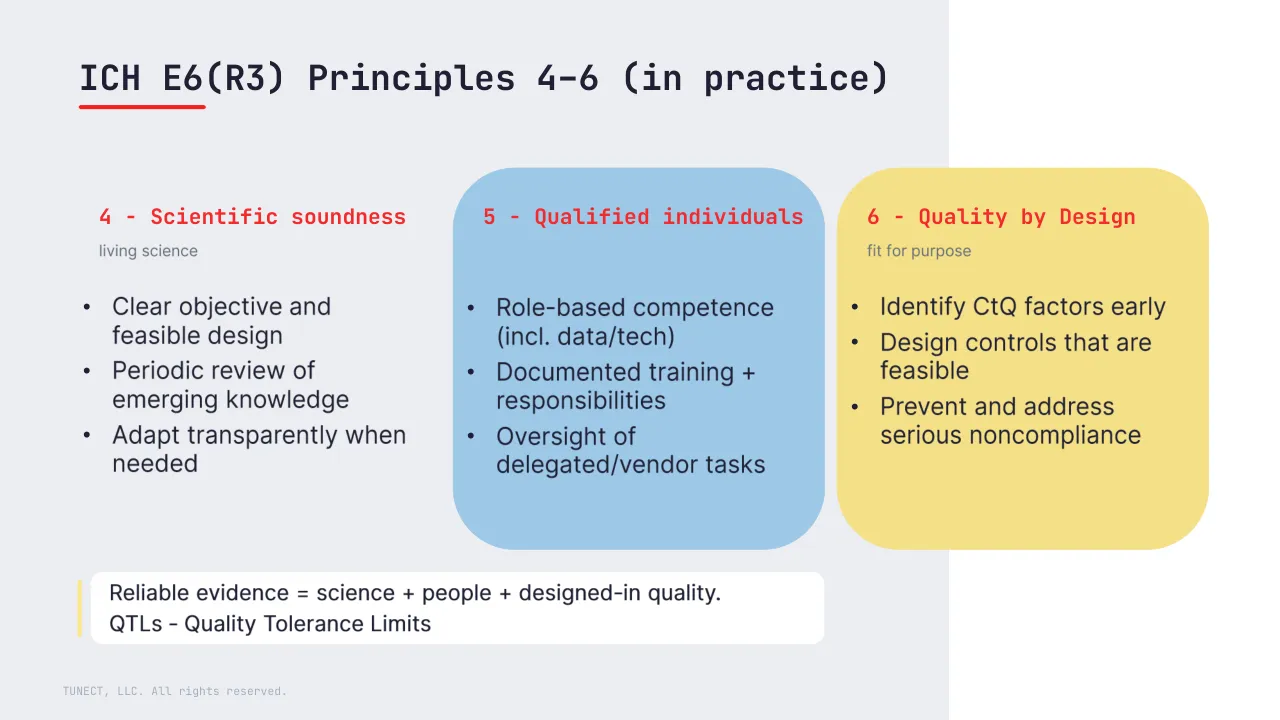
In the last post we covered Principles 1-3 (ethics, consent, independent review). Now we move to the reliability backbone of trial evidence: science, people, and quality by design. 4) Scientifically sound trials (and periodic review) Trials should be scientifically sound…
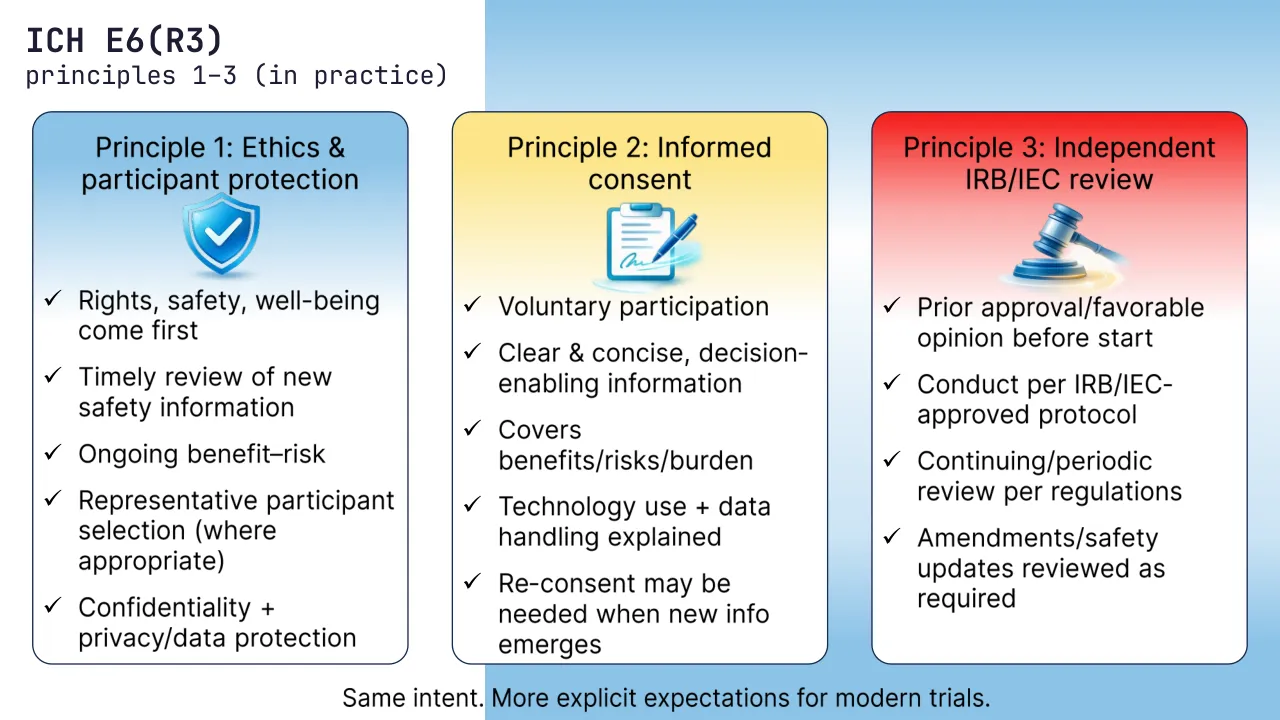
We’re starting the series on the 11 principles of ICH E6(R3). E6(R3) consolidates and reframes the 13 principles from E6(R2) into 11 with clearer emphasis and more practical expectations. 1) Ethical conduct and participant protection (Declaration of Helsinki) Clinical trials…
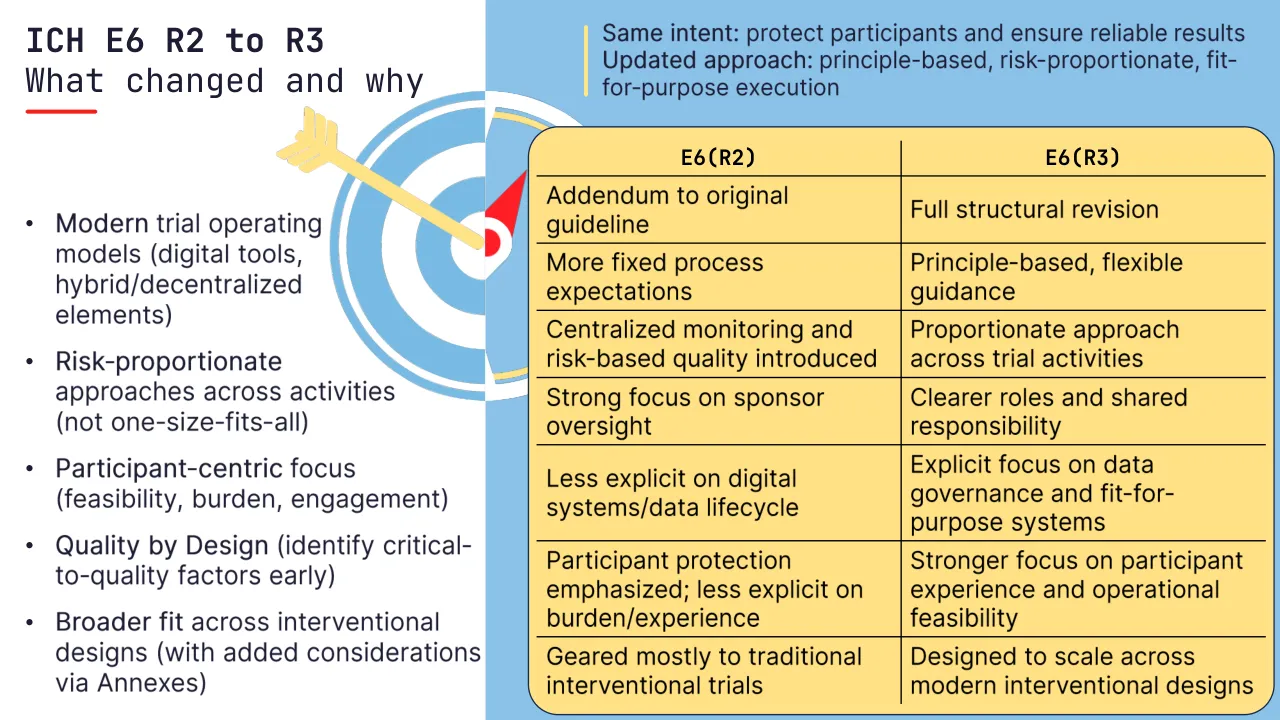
The revision from ICH E6(R2) to E6(R3) was long overdue. Here’s what changed and what it means in practice. Context R2 (2016) strengthened oversight: centralized monitoring, risk-based quality management, and clearer sponsor responsibilities. Since then, trials have become more digital…
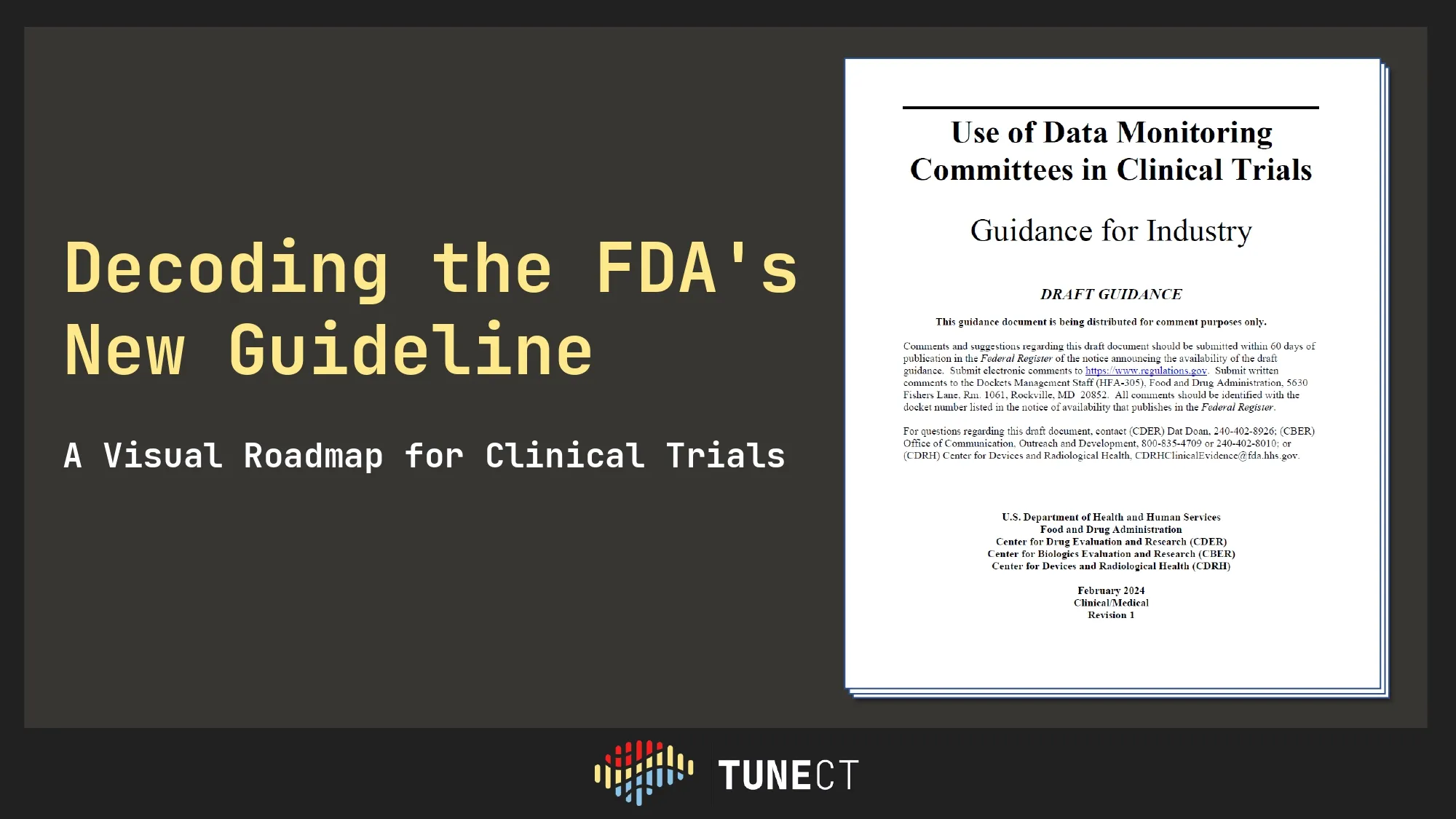
TUNECT is at the forefront of embracing the FDA‘s recent guidelines on the use of Data Monitoring Committees in clinical trials. We’re excited to share our innovative approach to interpreting these standards through comprehensive flowcharts. Stay tuned as we navigate…
As we step into 2024, what better way to kickstart the year than with a curated list of the 15 BEST books in Biostatistics and Statistical Programming, handpicked by our team! 15 BEST books in Biostatistics and Statistical Programming Primer…
📊 Within the realm of statistical analysis lies a challenging aspect that demands our close attention: the complexities of multiple comparisons. 📈 Statistical inquiry often encourages researchers to engage in exploratory analyses – a process full of opportunities. However, the…
What is Hardcoding? The public domain lacks a clear operating definition of hardcoding. Let’s review several definitions: Hardcoding: Inserting or correcting data directly into a program’s source code, bypassing external sources, when data is missing or needs correction [1]. Hardcoding:…
In the ever-evolving landscape of life sciences, adhering to regulatory guidelines is paramount to ensuring the integrity and security of data. One such critical guideline is 21 CFR Part 11. Embracing the Specific Part 11 Requirements: As part of its…